Showing posts with label whinchat. Show all posts

Saturday, 18 July 2015

Of twitchers and ringers

Late June saw me squeeze in a couple of quality twitches- first up was a splendid 1st summer male Ortolan in Morar, followed the next day by good views of a Blyth's reed warbler near Inverurie- at one point it even started to sing! Unfortunately the Ortolan was trapped and ringed and never seen again which was a shame as a number of birders were enroute to see what is a very rare bird for mainland Scotland. I was grateful to have been invited to see the bird before the ringers intervened as I would have been very miffed to have dipped under such circumstances. I can appreciate the scientific value of some ringing methodologies but the seemingly growing trend of targeting a scarcity in order to obtain a 'ringing tick' appears to be a worrying development within some sections of the ringing fraternity. Each to their own of course, but with so much 'guidance' given to birders and photographers concerning birds' welfare I wonder if, when and how it will/may become necessary to mitigate for ringing activities that have questionable scientific objectives in a similar way? 

1st summer male Ortolan.
As anticipated July has seen a major slump in terms of quality birds to be seen in the North of Scotland- largely a function of continuing challenging weather conditions, coupled with the usual interlude to migration. In consequence I have concentrated on gathering breeding evidence from my local patches in order to put the information onto the BTO bird track system that gets forwarded to the highland recorder for inclusion in the Highland bird report. I've managed some good records for the area including recently fledged chicks of redstart, winchat, grey wagtail and ring ouzel in addition to the commoner species such as spotted flycatcher, lesser redpoll, siskin, ringed plover and oystercatcher. Two barn owls visiting a probable nest site was an unexpected bonus as these birds have been slow to recover from  a couple of  back to back harsh winters a number of years ago. I have also seen two Black-throated diver chicks and enjoyed marvellous scope views of an adult in its magnificent summer plumage. 
common sandpiper
Barn owl
Ringed plover chick
Oystercatcher chick

Sunday, 31 May 2015

Courting couples & sad singles

Well I think it is official - spring has been dire for birds (and birders) in the NW Highlands- it has rained almost every day in May (and late April) and temperatures have rarely got up to 12 degrees celsius. Strong NW and W airflow has just compounded the misery for all concerned. My considerable time on local patches indicates that some migrants have been almost two weeks late in arriving, compared to 'typical' spring movements for up here, with densities of returning birds still remaining low. Following extensive field time I have however had small successes- in the form of a single pair of redstarts displaying and holding territory. Similarly, a single pair of winchats are now also on territory. In consideration of the expansive and suitable habit for these species, only a single pair of each causes me some concern and I wonder how long it will be before these species become locally extinct? A few pairs of spotted flycatchers are also nest building, although obviously struggling to find airborne insects. Swallows and martin numbers are just reaching what I would consider 'normal' for the area. Perhaps just as worrying is the number of unpaired birds that remain, with single male wood warbler and just two lone, male, whitethroats still bursting their lungs as they continue to struggle to find suitable mates- low densities are obviously making it difficult to find a date! Hopefully some keen and willing ladies may yet show up for the unpaired males although time is running short. Hmm- perhaps I sense a horrible analogy to my own situation! ;). Wheatear numbers are also low and a small number of males have also failed to find partners and can still be heard singing in a last ditch attempt to find a partner- I have watched these sad singles repeatedly chased off the territories of the paired birds. On a brighter note I saw a single, recently fledged grey wagtail yesterday- begging for food, so at least one of the three pairs that I am aware of have had a modicum of success. Hopefully June will see better conditions and increased breeding success. 

where are the ladies?
I'm alright- she was hard to find but my girlfriend seems impressed!
me too- but she still makes me sing every day!
well I'm still single and well in the brown stuff!

Saturday, 6 September 2014

Easterlies bring on the migrants.

A few days of light easterly winds in the southern North sea have brought a steady, albeit light passage of passerines. Yesterday I recorded between 50 and 60 individual birds on and around the main deck. Species composition was varied and interesting although no scarcities have turned up- yet! Below is a cross section of snap shots of the more appealing individuals. Fortunately there is also a substantial population of flying insects around and on the vessel, allowing most individuals to refuel before continuing their push south. 
Wheatear
Pied flycatcher
Redstart
Spotted flycatcher
Tree pipit
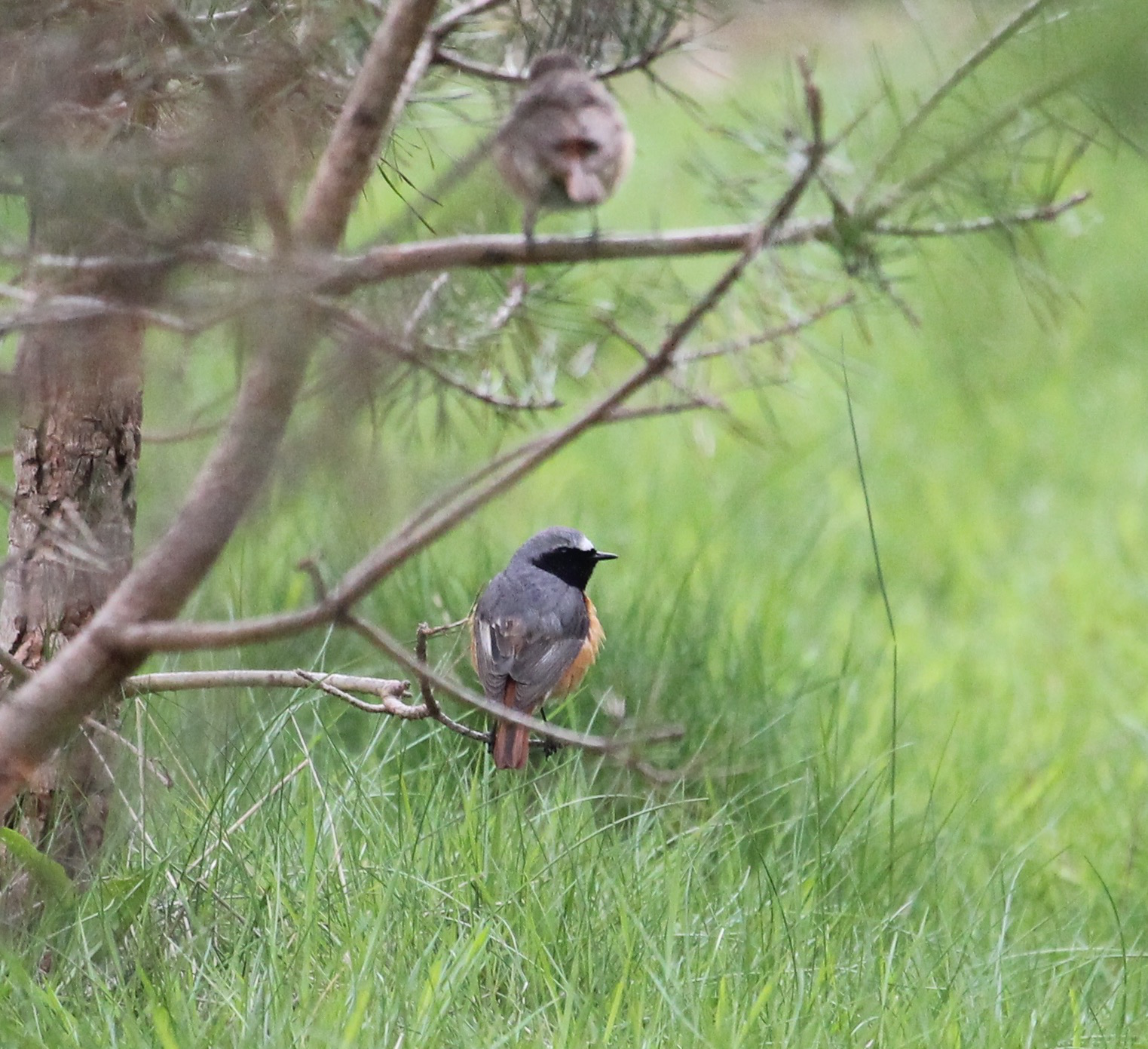
Whinchat

Wednesday, 4 June 2014

KP nuts and a saucy Savi's.

Last week I was finalising a plan for a significant twitch to try and catch up with spoonbill on the Montrose basin and Temminck's stint at Letham pools in Fife- both species being needed for my 'Scottish' list. Whilst packing my bag an RBA alert came through at 18:10 informing me that a Kentish plover had been found near Dunvegan on the Isle of Skye. With a minimum 3 hour drive to the site and 4 hours of light left it was a non-starter. A quick phone call to my birder friend Bob Mcmillan confirmed that he had found the bird and he obligingly provided an accurate grid. ref. for the site location. Plan B was set in motion very early the following day. As any twitcher knows, the feeling of total desolation following a major dip is not something to dwell on, so I'll just say that after a 03:00 start, a 6 hour return drive of 280 miles and 6 hours on site searching for the bird without success my mood could not really be described as jolly! The bird had obviously been a one- dayer and flown on overnight. To rub salt into my wounds I had received a couple of alerts during my travels informing me that both the stint and spoonbill had stayed in place all day- bummer. Highlight birds for my efforts were limited to 3 bar-tailed godwits and two pairs of very tidy whinchat. Enough said. I did enjoy spectacular views of the Cuillin range on Skye however. 


Anyway, moving swiftly on, a few days later I teamed up with former Highland recorder Al Mcnee for a very early twitch to Loch of Strathbeg to try and see a Savi's warbler. We left Inverness at 01:00, arrived on site shortly after 03:15 and had located the bird shortly after 03:30. Although distant we enjoyed intermittent 'scope' views for the next couple of hours. Although the bird was perched in an upright stance in the tops of the phragmites reed stems, the distance and wind direction did not allow me to hear it. Some you win, some you lose……..