Thursday, 4 June 2015

Crex crex

Just back from a few days on the Isle of Lewis where the theme of westerly gales and tough birding continued. I only managed a trip species list of 63 over three and a half days birding- including a number of seabirds seen from the two Minch crossings. Best birds were undoubtedly a 1st summer Mediterranean gull near Stornoway- a very scarce bird in Scotland and a very smart and very obliging Corncrake. Probably best to point out that I did not disturb the corncrake- it was creeping about in relatively scant vegetation (everything is late growing this year) and I took the photos from a public road, using my maximum focal length of 400mm and have cropped the shots significantly. As it was a very blustery day the bird was clearly oblivious to my presence due to the noise of the wind and the moving vegetation between the bird and my fortuitous vantage point. Having captured a few images I watched it creep about in the nettles until it was eventually lost from view. 


1st summer Med.Gull
Arctic tern

Sunday, 31 May 2015

Courting couples & sad singles

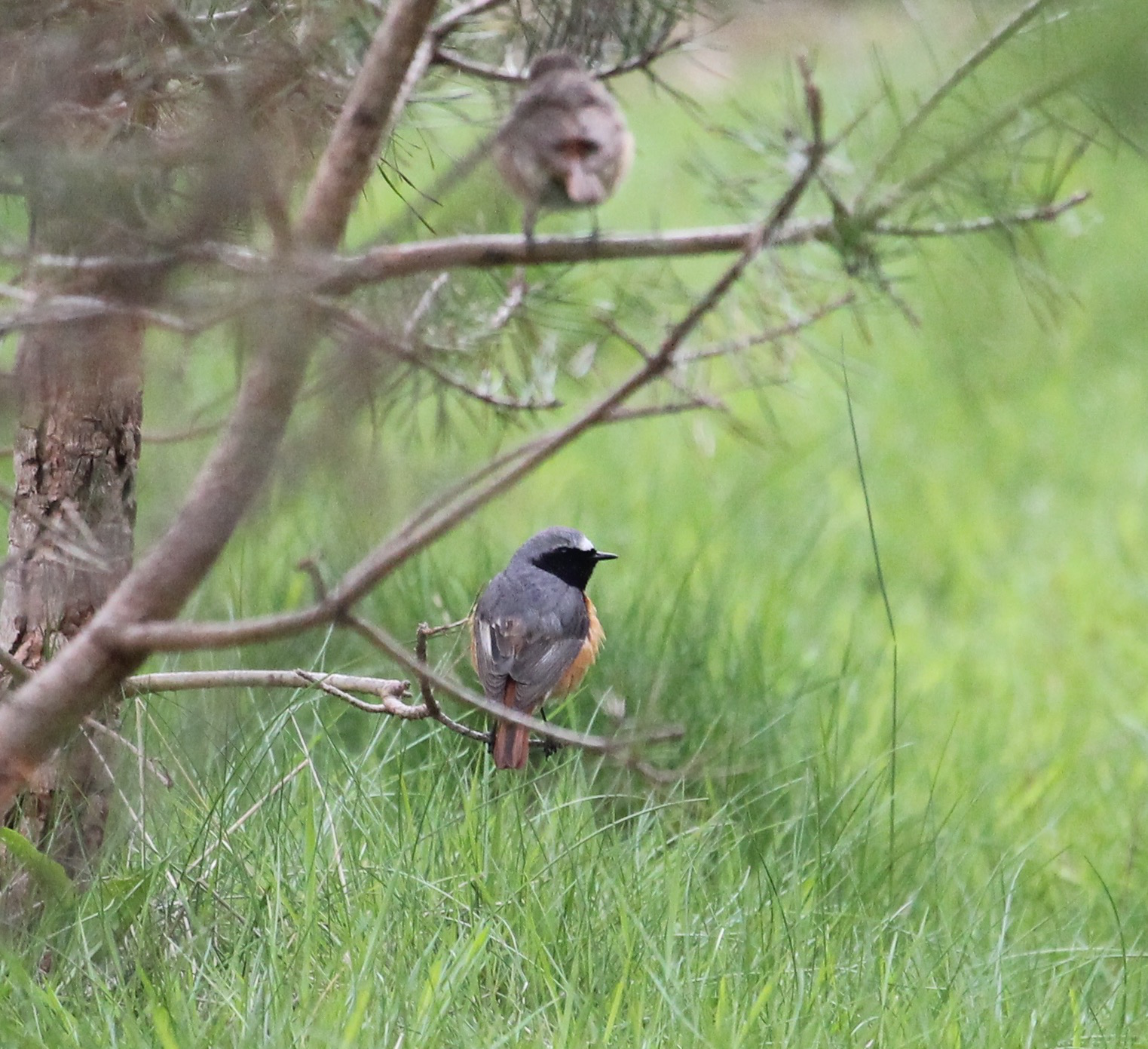
Well I think it is official - spring has been dire for birds (and birders) in the NW Highlands- it has rained almost every day in May (and late April) and temperatures have rarely got up to 12 degrees celsius. Strong NW and W airflow has just compounded the misery for all concerned. My considerable time on local patches indicates that some migrants have been almost two weeks late in arriving, compared to 'typical' spring movements for up here, with densities of returning birds still remaining low. Following extensive field time I have however had small successes- in the form of a single pair of redstarts displaying and holding territory. Similarly, a single pair of winchats are now also on territory. In consideration of the expansive and suitable habit for these species, only a single pair of each causes me some concern and I wonder how long it will be before these species become locally extinct? A few pairs of spotted flycatchers are also nest building, although obviously struggling to find airborne insects. Swallows and martin numbers are just reaching what I would consider 'normal' for the area. Perhaps just as worrying is the number of unpaired birds that remain, with single male wood warbler and just two lone, male, whitethroats still bursting their lungs as they continue to struggle to find suitable mates- low densities are obviously making it difficult to find a date! Hopefully some keen and willing ladies may yet show up for the unpaired males although time is running short. Hmm- perhaps I sense a horrible analogy to my own situation! ;). Wheatear numbers are also low and a small number of males have also failed to find partners and can still be heard singing in a last ditch attempt to find a partner- I have watched these sad singles repeatedly chased off the territories of the paired birds. On a brighter note I saw a single, recently fledged grey wagtail yesterday- begging for food, so at least one of the three pairs that I am aware of have had a modicum of success. Hopefully June will see better conditions and increased breeding success. 

where are the ladies?
I'm alright- she was hard to find but my girlfriend seems impressed!
me too- but she still makes me sing every day!
well I'm still single and well in the brown stuff!

Sunday, 10 May 2015

Kentish Plover twitch

Migration remains a bit of a concern with everything late, and/or in low numbers. Since my last post I have seen a handful of swallows, a few cuckoos and blackcaps and the occasional house martin. Although numbers of wheatears, willow warblers and chiffchaffs have slowly risen, they are still scarce on the ground and I have yet to find a single spotted flycatcher, redstart, sedge warbler, winchat or grasshopper warbler- they can't be too far away now- surely? 

A recent twitch to Moray for a couple of Avocets turned into a horrible dip- the news came out late as usual for that part of the world, as although there are plenty of good birders in Moray there do not appear to be any subscribers to the bird news services and so good birds are usually just put on the local website. Although subsequently picked up by the news services, this often results in the birders nightmare of getting news of much sought after birds 4 or 5 hours too late to twitch them successfully! An Avocet in Scotland is almost a mega!! Anyway, moving swiftly on, I successfully twitched the marvellous Snowy owl on the Black Isle. The bird looked good to be a genuine vagrant- recent Northerly and North-easterly winds, the bird was in great condition with clean unworn primaries and tail feathers, photographs showed the feet to be pristine, no leg rings and so the general concensus in the field was that it was a wild bird. Following the happy, near 80 mile journey home I was just going through the motions of updating my BUBO Scottish/Highland life lists when news broke that it was an escape- from the Black isle wildlife park. Grrrrrrrrrrr. I make no secret of my distaste for keeping birds in aviaries - especially raptors, so I'm glad it escaped, hope it survives and continues to head north! (last seen at Tarbet Ness yesterday). 

So it was with much relief that I successfully twitched the wonderful Kentish Plover at Dornoch- yet another great find by dedicated patch birder Dean Macaskill. A nervy couple of hours working the beach finally paid off when we saw some other birders scrutinising the piles of seaweed high up near the dunes. The area held a number of ringed plover and dunlin and eventually we got onto the very cryptic K.P. I couldn't get closer than 50 or 60 metres for fear of harassing and flushing the bird so got some record shots from the dune system. The photos do not really do it justice as through the scope it was a gem of a bird. The bird of my year so far and a welcome addition to my life list! Hopefully the spring will turn up a few more twitchable rares!  


Sunday, 26 April 2015

Critical time for 'spring' migrants

Spring is woefully late and very unpredictable in the NW Highlands this year. Last week saw a trickle of migrants finally arrive and although numbers have been worryingly low it has been good to record my first wheatears, chiffchaffs, and willow warblers. By putting in a ridiculous amount of field time I have also recorded single singing tree pipit and blackcap and a couple of common sandpipers. A few days of mild temperatures and strong sunshine last week made my world of birding seem reassuringly 'normal', with my local patches full of calling tits and finches. Forward a few days to 'Take 2' and as if a harbinger of poor weather, I have been seeing good numbers of redwing, pink-footed geese and a couple of iceland gulls- it feels more like early March than late April!
guess the month!
snow at circa 15 metres above sea level
The last couple of days have witnessed tumbling temperatures- I had to use de-icer early this morning and it has been snowing intermittently for most of today. Although normal to get falls of snow on the hills and mountains at this time of year at this relatively high latitude, it is a nasty surprise to find snow lying at sea level. 

pink footed geese
My local patches include a couple of sheltered, wooded glens and river courses that provide some cover for resident and migrant birds alike, but today everything was bitterly cold and miserable and awfully challenging for the smaller passerines. There are no flying insects to support the newly arrived migrants and it was rather disconcerting to see several willow warblers and chiffchaffs stirring up leaf litter in an attempt to find invertebrate fodder this morning. I don't recall ever seeing leaf warblers in falling snow before. Some of the birds are looking sluggish and bedraggled and making no attempt to sing as they concentrate on maintaining their metabolisms. The softer, water soaked pastures are full of flocks of passage wheatears and meadow pipits, again desperately probing for nourishment, when normally these birds would be frenetically moving up the coast. My chances of recording a swallow must be about the same as winning the lotto- and I don't even buy tickets. As for redstarts, whinchats, sedge warblers and groppers I can only hope that good numbers are backed-up down south. I'm badly missing spring on the Lizard!! 

A selection of 'happy' shots from last week:-

singing chiffchaff
common sandpiper
tree pipit
wheatear in hailstones

Tuesday, 14 April 2015

Sleepy North sea

Just back from a five week stint in the North sea. I had hoped to start seeing some visible migration as we got into early April but with low temperatures, predominately NW airflow and plenty of fog, bird numbers were very low with just two robins, two meadow pipits and a stonechat recorded on and from the vessel.  Seabird numbers were also low, although that was not unexpected for the time of year. Highlights included a few puffins and a tatty looking Iceland gull that didn't look sharp enough to be an adult with the main features of the plumage and bare parts leading me to conclude that it was most likely a 3rd winter- hopefully a larophile will point me in the right direction if that age is incorrect.


Aside from that a brief port call to Montrose allowed a couple of hours strolling around the coastal plain  where I got a shot of a an interesting leucistic oystercatcher. Spring feels a long way off!


Thursday, 26 February 2015

Winter wanderings

I'm sure that to many birders it is starting to feel like a very long winter. This is certainly the case in the Scottish Highlands with frequent bouts of gales interspersed with rain, hail, sleet and snow. The sun has rarely been seen and the short daylight hours provide scant opportunity to get in the field. Trying to photograph birds has been very frustrating with generally dreadful light levels. Despite the challenging conditions I have managed to scrape together a year list of 116 and also got to see a few decent birds including a couple of white-winged gulls, two tundra bean geese, a handful of snow buntings, a water pipit, a jacksnipe and a small flock of scaup- all pretty tame in a wider British context but very welcome birds in this part of the world at this time of the year. This morning at Ardmair I saw a couple of displaying ringed plovers and there was a mini fall of 4 pied wagtails and a meadow pipit- signs that birds are returning for the as yet very distant spring! 

Bean geese (tundra) at Ardmair
Iceland gull (Achnahaird)
distant Scaup at Alturlie point
wintery scene on Slioch overlooking loch Maree

Tuesday, 20 January 2015

Montrose, Angus.

Recently, with widespread violent storm force winds and perilous sea states throughout most of the British and Irish sea areas, my vessel, - like many others, ran for shelter in whatever harbours and inshore waters provided a safe haven. We obtained a berth in Montrose harbour for a few days before heading back out to Lunan bay, followed by further weather standby time in St. Andrews bay when the wind veered to a more southerly direction. I took the opportunity to enjoy a few hours birding around Montrose- primarily along the stunning beach but also a few hours around the excellent Montrose basin. Winter birding highlights included a dozen or so grey plover, a handful of very smart sanderling, tree sparrows, yellowhammers, purple sandpipers and in St Andrews bay a very nice raft of circa 40 little auks and 4 velvet scoters. At a personal level it was quite satisfying being able to boost my BTO 'bird track' year list to 75 species- a very small consolation for missing my much needed Ivory gull- that has been frequenting my local home patch for some time- hmmm- I wonder if it will stick until I will be able to get home and catch up with it? - probably not. 

grey plover
grey plover
sanderling
Montrose basin

Saturday, 3 January 2015

Lunan Bay, Angus.

With Beaufort storm- force 10 winds and potentially dangerous sea states forecast for much of the North sea, our vessel left the Forties field for the shelter of Lunan bay in Angus, just south of Montrose. As soon as I heard the location of our refuge I had a smile on my face with the prospect of a couple of days spent on the deck working through flocks of scoters and watching auks and divers. Unfortunately the only flocks of scoter were a couple of miles closer to the shore so I had no chance of picking out a rarity! I have not seen a single diver during the 3 days spent in the bay and assume that they too are closer inshore. From a birding perspective I have consoled myself with seeing a handful of little auks and two sightings of a dark morph arctic skua- both good birds to get on my fledgling year list that now stands at a very unimpressive 14! At least it will get a boost once I'm back ashore. The only other sighting of interest has been a couple of close passes by the resident bottle-nosed dolphins. The weather seems to have moderated significantly overnight and we will soon be heading back offshore- at least until the next Atlantic depression stirs things up again!