I first heard a distant corncrake in the late 1970's- a single bird calling from a cereal crop field in Dorset on a lovely late spring evening. Naturally the field was vast and there was no way I was ever going to see the bird but it was a lovely experience. Fast forward 30 years or so and I found myself in the outer Hebrides for the first time in June 2000 for a fly fishing holiday on the island of South Uist. I caught a few trout, enjoyed a few drams and heard a lot of corncrakes- they were everywhere it seemed, with birds calling from every strip of grass, every patch of nettles and every drainage channel full of flag irises. After dinner, most evenings I would pick up my binoculars and try and stalk a bird in the hope of seeing one. When a bird called I took a few very slow, quiet steps along the adjacent tracks towards it, waited patiently when it stopped it's monotonous 'crex crex' call, then repeated the process- over and over and over again! Often I felt as if I was tantalisingly close to the bird, only for it to evaporate through the vegetation and then start calling much further away. The task was exasperated by the way in which the bird would be able to 'throw' it's voice, often aided by swirling air currents- sometimes giving the impression that the bird was much closer than it probably was. Initially this was just a bit of birding fun- but I needed to see a corncrake before I could add it to my 'life list'. Anyway, the holiday ended and I still needed to tick off a corncrake. Since 2000 I have visited South Uist on 6 or 7 occasions and have also visited North Uist, Benbecula and had several extended visits to Lewis- all these islands holding good numbers of corncrakes in the summer months. I have spent countless hours over the last decade or so on each of these visits trying to see this wretched bird with the 'fun' going out of the encounters many moons ago. Recently I returned to Lewis to spend a few days birding at Eorpie, port of Nis and the Butt of Lewis. On the first evening I heard a corncrake calling from the edge of loch Stiapabhat. I enjoyed views of garganey, gadwall and a black-tailed godwit and tried to ignore the rather annoying 'crex crex' call. The following day as well as enjoying some decent weather and good birding, a couple more corncrakes were heard- but I had given up trying to see one. A day later I stopped to try and get some phone signal near the tea room when yet another corncrake started calling from a patch of rough vegetation. I checked my sms rare bird alerts, casually strolled towards the vegetation and to my disbelief a corncrake lifted its' head above the leaves and launched itself into the air- it flew quite high past one of the crofts giving good flight views and leaving me once again totally bemused at the ups and downs of birding. Later I had the added bonus of a glaucous gull and a fantastic experience when an adult long-tailed skua settled on the rough pasture just west of the lighthouse- happy birding days indeed!
Thursday, 30 May 2013

Wednesday, 8 May 2013
Patch rewards
I love the excitement and exhilaration of twitching a new bird, but obviously with temporal and financial constraints it is just not feasible to do this as much as I would like. Having said that, I get a massive amount of satisfaction from finding 'good' birds on my local patches. This is especially so during 'spring' and 'autumn' migration times as you never know what will turn up. I readily admit that my record of finding rare and scarce birds is rather poor but aside from that, finding 'year ticks' is the bread and butter of much of my birding. Recently and contrary to a very late highland spring, a trickle of migrants have been pushing through and aside from the regular willow warblers, sand martins and wheatears I have enjoyed a flurry of white wagtails (alba), a single osprey and a handful of whimbrel- birding at its' very rewarding best!
 |
| osprey- pretty uncommon in the extreme NW |
 |
| wheatear |
 |
| whimbrel |
Monday, 6 May 2013
out for a duck (2)
24.04.2013
After the Strontian fiasco it was inevitable that I still felt the need to go on a major and hopefully successful twitch! The only bird of real interest and that remained do-able in terms of distance, was the Harlequin duck at Balranald on North Uist. After looking at the ferry and b n b options I decided to go for it the following day. After a 3.5 hour drive I arrived in Uig on the isle of Skye at 07:15 and settled down to wait for the ferry. A couple of hours later I enjoyed the first manx shearwaters of the year and a bonus great skua. I arrived on a very windy but dry North Uist and after swiftly checking in to the b n b I started out across the machair towards the coast. On reaching the coast I was surprised not to see any other birders and realised I would have to settle down and search for the bird in a westerly force 6/7 and rough seas. Unfortunately the tide was also way out leaving a mass of exposed rocks behind which any number of sea ducks could hide- things did not look good!
Anyway, I won't go into all the details but needless to say that I finally got onto the bird after a very stressful 4.5 hour search- the umpteenth distant black speck on the sea finally proving to be the bird!
After watching the duck for 30 minutes or so I eventually lost it in the surf but my visit was certainly worth it as the bird was seen the next day and has not been reported since! I also enjoyed some other good birds including ring-necked duck, corn bunting and hen harrier.
 |
| coast just west of Balranald |
 |
| difficult finding a sea duck in that!! |
 |
| distant record shot as they say!!!! |
 |
| corn bunting |
 |
| shoveler |
 |
| whooper swan |
Saturday, 4 May 2013
Out for a duck (1)
19.04.2013
After my long sea stint I couldn't wait to get out on a twitch and see some decent birds and hopefully push along my British life list. Naturally, being based in a remote part of Scotland this entails considerable travel and so my options for 'twitchable' birds were very limited. I did a 320 mile 'day run' to Strontian in an attempt to locate the black duck that has been hanging around for months/years. Naturally I arrived on site a couple of weeks too late with the bird probably re-located to a nice quiet breeding area. If you are going to dip you may as well do it in style so I consoled myself with a few year ticks- grey wagtail, cuckoo and willow warbler and enjoyed the scenery!
 |
| Corran ferry |
 |
| Corran light |
 |
| Fort William below the Ben Nevis range |
Sunday, 14 April 2013
vis mig flurry
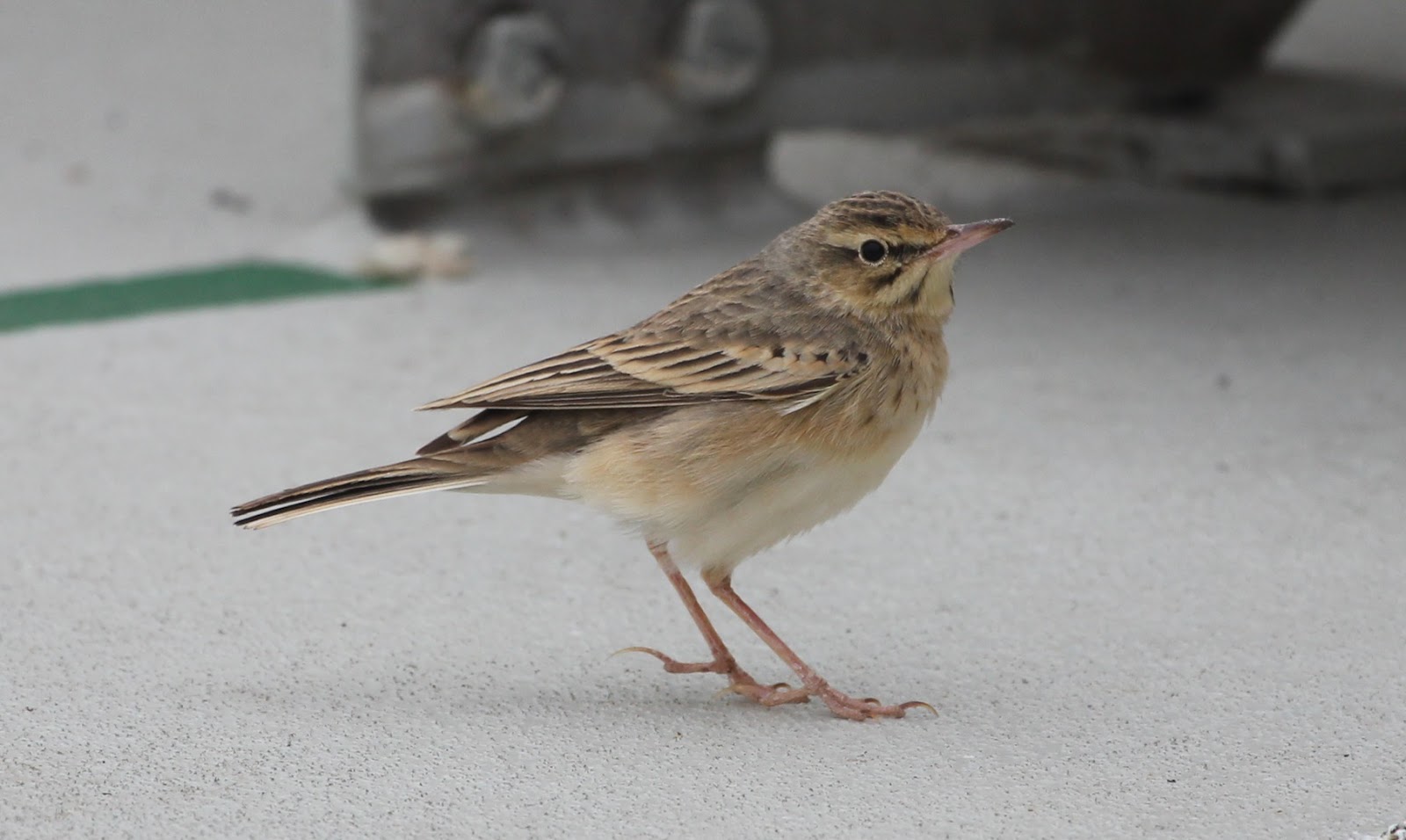
It has been quiet of late with just the terns obviously flying north. Today was better with a kestrel, 2 turtle doves, 2 collared doves, a very nice garden warbler and a pipit sp. I think it is probably a very worn and abraded (from the desert sand) tree pipit? The pink bill looks right and the hind claw is relatively short but in truth I struggled to ID this one. I often struggle to ID birds on a ship- the habitat gives no clues!
I have been at sea for sixty days and am due off in 2 or 3 days time- can't wait for a cold beer and the chance to get back to the British isles for some quality spring birding!
16.04 update- thanks to Kriss Webb (Scilly spider), and Paul Stancliffe (BTO migration blog) for IDing the pipit as a Tawny
I have been at sea for sixty days and am due off in 2 or 3 days time- can't wait for a cold beer and the chance to get back to the British isles for some quality spring birding!
16.04 update- thanks to Kriss Webb (Scilly spider), and Paul Stancliffe (BTO migration blog) for IDing the pipit as a Tawny
 |
| garden warbler |
 |
| Tawny pipit |
 |
| turtle dove |
 |
| collared dove |
 |
| kestrel |
Tuesday, 9 April 2013
a lesson learned
Having made a big sweeping statement on a recent post as to how the cory's tend to avoid close passes with my vessel, the inevitable happened today with several birds coming in to 50 metres or so- the first of several occasions during the day when mother nature put me firmly back in my place!
 |
| arctic skua |
I had a great day today and recorded 11 species of seabird- Cory's shearwater, gannet, LBB gull, YL gull, arctic skua, great skua, common tern, sandwich tern, black tern, sabine's gull, kittiwake. There are now thousands of sandwich terns in the survey area and I presume many of these are now resident as opposed to passage birds. They are particularly impressive in the late afternoon when they gather in large flocks to feed on the shoals of sardines. This provides ample ambush opportunities for the growing number of arctic skuas too. The black terns were definitely passage birds and the first I have seen moving north this 'spring'.
Having spent several hours on the seabird melee I was just thinking that I don't see many seabirds in this part of the ocean that really challenge my IDing abilities anymore, unless they are very distant (or juvenile gulls!). I was continuing to self-assess and starting to feel quite good about myself when a small grey-white-black seabird went fast across the bow and sheared hard and fast down wind- mother natures slap back number 2! I could not decide if it was a probable phalarope or maybe a white-faced stormy!
Having consoled myself that not being able to ID one seabird was not too bad, a few minutes later I got my come-uppance again when I noticed a tern that was obviously bigger and heavier than a sandwich flying purposefully north. Having got on it with the trusted opticrons it showed a massive orange-red bill but flying away I couldn't get anything else on it in the late afternoon light so had to leave that one un ID'd too- slap back No. 3! I think I may have missed an opportunity to ID a lifer in the shape of my first ever Royal tern?- or was it a wayward caspian? With the current weather systems I would not like to guesse! Anyway, serves me right for getting cocky and forgetting that after 40 years of birding I still learn something new every time I look at our feathered friends!
 |
| common tern |
 |
| arctic skua |
 |
| cory's shearwater |
 |
| sandwich tern |
Sunday, 7 April 2013
super sabs.
3 days of awful weather including 6-7 metre swell and a nasty Beaufort force 7/8 has made conditions onboard pretty difficult for all concerned. Although I do not suffer from sea sickness I do get tired from the constant vessel motion- especially as it has been so rough that there has been a danger of being thrown out of my bunk on occasion! Anyway, a brilliant bonus of the NW gale was the arrival of a flock of 7 Sabine's gulls- a great surprise and a species I was not expecting this far south and east. The birds looked really comfortable in the high winds and seas- they are so obviously an oceanic species when viewed under such conditions. As can be seen below I really struggled to take photos. in the bright sunshine, 28 knot winds and from the heavily rolling vessel. I'm not too bothered though, as it was such a treat to see these delightful gulls. All tiredness was forgotten for the few minutes that they spent around the ship.


 |
| with sandwich tern |
Thursday, 4 April 2013
cory's move north
It has been very quiet over the last week or so, with persistent NW airflow halting any anticipated vis. mig. The exception to this being an increase in sandwich terns, with the largest daily count of 80+ birds flying into the wind. A couple of distant flocks of duck sp. have also been observed flying north. Yesterday the wind finally changed direction and has been blowing consistently from the SW. This seemed to spur the cory's shearwaters into action. Yesterday I recorded 40+ birds throughout the day and this afternoon I counted 94 birds past the ship in 3 hours- all moving purposefully north. I never tire of watching these splendid ocean wanderers. This species never seems as comfortable as great shearwaters when it comes to flying past the ships that I am on, and they rarely approach closer than 150 metres or so. This makes them quite challenging to photograph but I'm fairly happy with some of the snaps I took today. Hopefully more goodies will follow!


Subscribe to:
Posts (Atom)