Just back from family pre-xmas visits in Bristol and Cornwall (Kernow). It's a long way to travel from the NW highlands of Scotland so I always incorporate some rather intensive birding along the way. Having done my bit in Bristol, it seemed an ideal opportunity to head up to Slimbridge WWT to catch up with the long staying long-billed dowitcher. It was a bright, cold, frosty morning as I headed up the M5 and I made good time, arriving at the visitors car park at 08:10- an hour and twenty minutes of daylight to use before the WWT opened at 09:30. I spent the time getting my scope and bins ready then enjoyed the varied flocks of wildfowl flying overhead. Birds were everywhere, something that always takes a while to get used to after a spell in the avian desert of the NW highlands! Having eventually got into the reserve, I was miffed to find that the hide to the south lake was closed for refurbishment- this had not been mentioned when I had rung up to enquire about access a few days before my visit. This was a serious blow as the LBD had often been seen from that location. My chances of connecting with the bird had been reduced by 50% and I immediately set off under a dark cloud to see if it was viewable from the alternative hide that overlooks the tack piece. The fresh wind was bitterly cold and blowing straight in my face as I carefully worked my way through the several thousand waders and wild fowl. I just started working through a flock of godwits in anticipation of getting on the LBD when a buzzard flew in and flushed everything- the godwit flock flying off high towards the south lake with no sign of my target bird. I had the all too familiar 'dipped out' feeling and trudged off to the Zeiss hide where as if in compensation I had great views of a bittern standing out in the open in bright winter sunshine. Of course I had opted for scope rather than camera so a cracking photo. opportunity went begging. I re-checked the tack piece with no sign of the LBD and as it was now late morning I headed out of the reserve to begin my drive to Cornwall. I watched a flock of geese land in a field next to the overflow car park so decided to have a quick look. I quickly got onto a small number of (european) white-fronts, and a dozen or so Bewick's swans. As I turned around I noticed a flock of waders in the opposite field so started working through them with the scope- unbelievably I got onto the dowitcher some 30 seconds later! I enjoyed the bird for 15 minutes or so before the whole flock was flushed and flew off to the south. I was a happy birder as I headed down the M5. Traffic was light and I made good time so had a quick look at Mounts Bay before heading to Helston.
Over the next four days I spent innumerable hours working through the divers in Mounts bay before I finally got reasonable views of the Pacific diver. Having seen it a couple of times distantly, I was finally satisfied with views that I considered were good enough for me to add this to my life list- especially as it was associating closely with 3 black-throats that offered good comparisons. I also recorded dark-bellied brent goose, velvet scoter and common scoter, great northern divers and two very nice little gulls. Between intense scope sessions I wandered around the Marazion marsh where my best find was a firecrest- a cracking bird in my book! I also got on to a cracking black-necked grebe at college reservoir, Falmouth.
 |
| snipe- Marazion marsh |
 |
| grey heron- Marazion marsh |
Further time was spent at the Helston water treatment works near the boating lake and also at the Loe pool. I was pleased to find a black redstart, at least a dozen chiffchaffs and two more firecrests at these sheltered locations. The light was generally poor but I did scrape together a few photos.
 |
| black redstart- Helston sewage works |
It was great to see so many chiffchaffs competing for the flies around the settling tanks. A
blackcap was another bird I don't normally see in the winter months.
 |
| firecrest- Loe pool, Helston |
 |
| a wee cracker! |
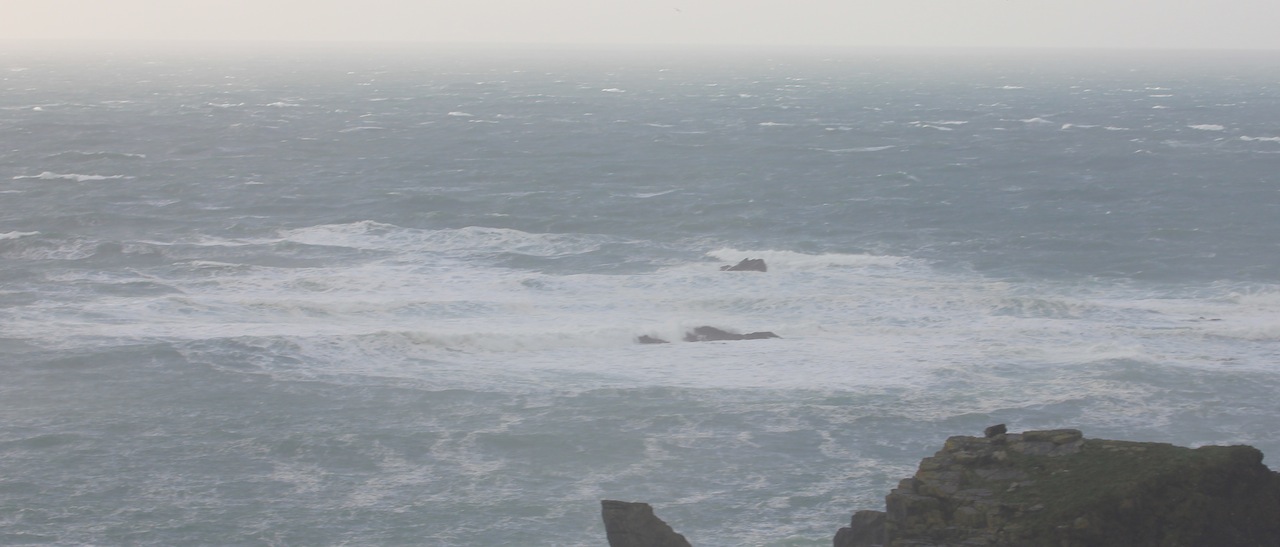
The weather kicked off over the next few days so birding was difficult but I managed coastal walks on the lizard and at Pendeen watch. I decided not to go for the sub-alpine warbler in St. Just, as looking into peoples gardens is my least favourite type of birding. The lizard provided reasonable views of a chough and there were plenty of kittiwakes and common guillemots heading west past Pendeen watch.
 |
| rough seas off the Lizard |
 |
| chough- Housel bay, the Lizard |
 |
| Guillemots over rough seas at Pendeen watch |
I decided to stop off in Exminster for the
rose-coloured starling on my drive back to Bristol airport. I was just about to give up on the bird after waiting in the churchyard for over 2 hours when it flew up from a non-viewable garden and skulked in the tree tops for a minute or so before disappearing from view.
 |
| 1st winter rose-coloured starling- honestly! |
All in all an excellent trip- some great birds seen and the family kept happy as well!