Showing posts with label wheatear. Show all posts

Sunday, 31 May 2015

Courting couples & sad singles

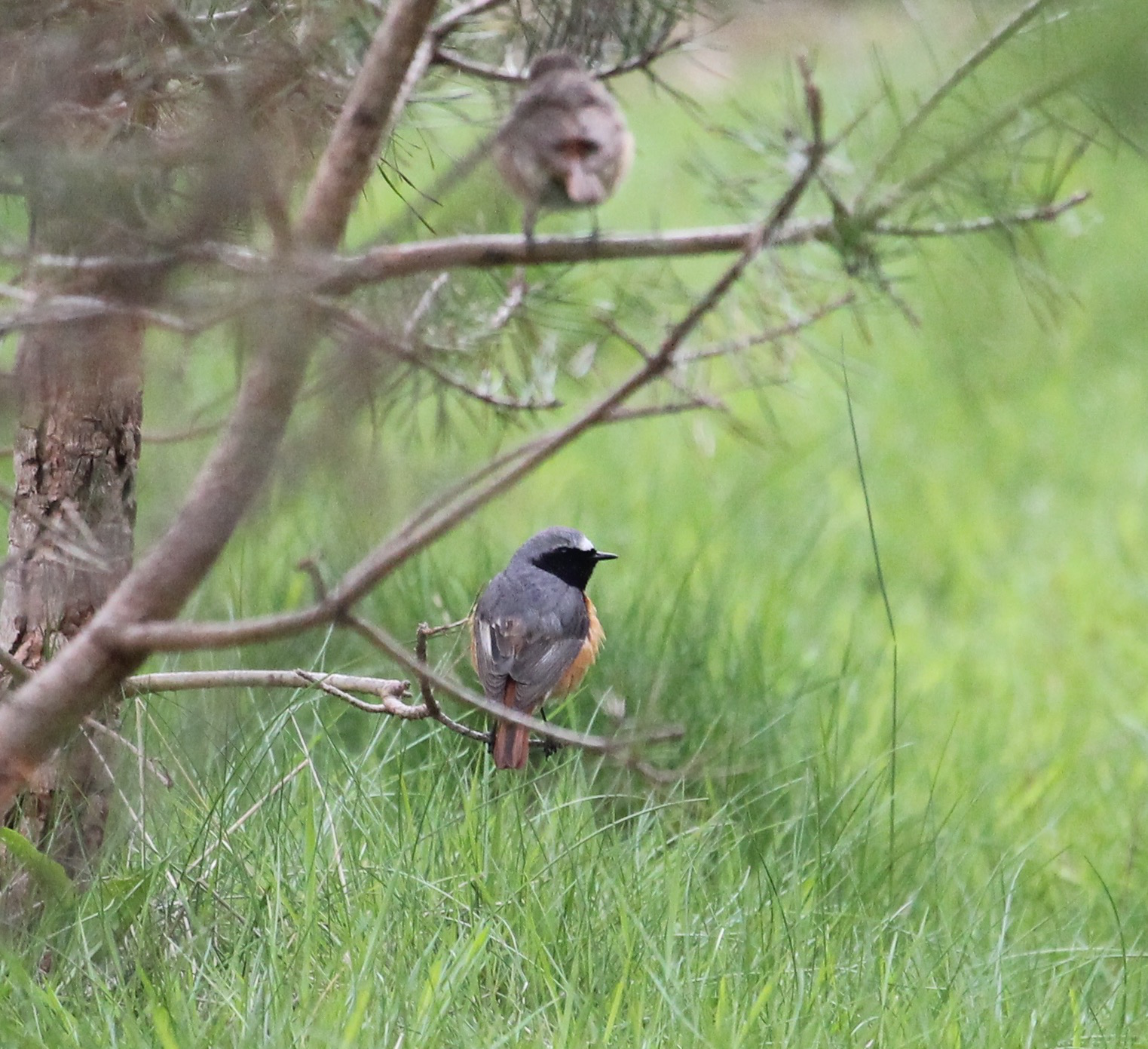
Well I think it is official - spring has been dire for birds (and birders) in the NW Highlands- it has rained almost every day in May (and late April) and temperatures have rarely got up to 12 degrees celsius. Strong NW and W airflow has just compounded the misery for all concerned. My considerable time on local patches indicates that some migrants have been almost two weeks late in arriving, compared to 'typical' spring movements for up here, with densities of returning birds still remaining low. Following extensive field time I have however had small successes- in the form of a single pair of redstarts displaying and holding territory. Similarly, a single pair of winchats are now also on territory. In consideration of the expansive and suitable habit for these species, only a single pair of each causes me some concern and I wonder how long it will be before these species become locally extinct? A few pairs of spotted flycatchers are also nest building, although obviously struggling to find airborne insects. Swallows and martin numbers are just reaching what I would consider 'normal' for the area. Perhaps just as worrying is the number of unpaired birds that remain, with single male wood warbler and just two lone, male, whitethroats still bursting their lungs as they continue to struggle to find suitable mates- low densities are obviously making it difficult to find a date! Hopefully some keen and willing ladies may yet show up for the unpaired males although time is running short. Hmm- perhaps I sense a horrible analogy to my own situation! ;). Wheatear numbers are also low and a small number of males have also failed to find partners and can still be heard singing in a last ditch attempt to find a partner- I have watched these sad singles repeatedly chased off the territories of the paired birds. On a brighter note I saw a single, recently fledged grey wagtail yesterday- begging for food, so at least one of the three pairs that I am aware of have had a modicum of success. Hopefully June will see better conditions and increased breeding success. 

where are the ladies?
I'm alright- she was hard to find but my girlfriend seems impressed!
me too- but she still makes me sing every day!
well I'm still single and well in the brown stuff!

Sunday, 26 April 2015

Critical time for 'spring' migrants

Spring is woefully late and very unpredictable in the NW Highlands this year. Last week saw a trickle of migrants finally arrive and although numbers have been worryingly low it has been good to record my first wheatears, chiffchaffs, and willow warblers. By putting in a ridiculous amount of field time I have also recorded single singing tree pipit and blackcap and a couple of common sandpipers. A few days of mild temperatures and strong sunshine last week made my world of birding seem reassuringly 'normal', with my local patches full of calling tits and finches. Forward a few days to 'Take 2' and as if a harbinger of poor weather, I have been seeing good numbers of redwing, pink-footed geese and a couple of iceland gulls- it feels more like early March than late April!
guess the month!
snow at circa 15 metres above sea level
The last couple of days have witnessed tumbling temperatures- I had to use de-icer early this morning and it has been snowing intermittently for most of today. Although normal to get falls of snow on the hills and mountains at this time of year at this relatively high latitude, it is a nasty surprise to find snow lying at sea level. 

pink footed geese
My local patches include a couple of sheltered, wooded glens and river courses that provide some cover for resident and migrant birds alike, but today everything was bitterly cold and miserable and awfully challenging for the smaller passerines. There are no flying insects to support the newly arrived migrants and it was rather disconcerting to see several willow warblers and chiffchaffs stirring up leaf litter in an attempt to find invertebrate fodder this morning. I don't recall ever seeing leaf warblers in falling snow before. Some of the birds are looking sluggish and bedraggled and making no attempt to sing as they concentrate on maintaining their metabolisms. The softer, water soaked pastures are full of flocks of passage wheatears and meadow pipits, again desperately probing for nourishment, when normally these birds would be frenetically moving up the coast. My chances of recording a swallow must be about the same as winning the lotto- and I don't even buy tickets. As for redstarts, whinchats, sedge warblers and groppers I can only hope that good numbers are backed-up down south. I'm badly missing spring on the Lizard!! 

A selection of 'happy' shots from last week:-

singing chiffchaff
common sandpiper
tree pipit
wheatear in hailstones

Saturday, 6 September 2014

Easterlies bring on the migrants.

A few days of light easterly winds in the southern North sea have brought a steady, albeit light passage of passerines. Yesterday I recorded between 50 and 60 individual birds on and around the main deck. Species composition was varied and interesting although no scarcities have turned up- yet! Below is a cross section of snap shots of the more appealing individuals. Fortunately there is also a substantial population of flying insects around and on the vessel, allowing most individuals to refuel before continuing their push south. 
Wheatear
Pied flycatcher
Redstart
Spotted flycatcher
Tree pipit
Whinchat

Wednesday, 8 May 2013

Patch rewards

I love the excitement and exhilaration of twitching a new bird, but obviously with temporal and financial constraints it is just not feasible to do this as much as I would like. Having said that, I get a massive amount of satisfaction from finding 'good' birds on my local patches. This is especially so during 'spring' and 'autumn' migration times as you never know what will turn up. I readily admit that my record of finding rare and scarce birds is rather poor but aside from that, finding 'year ticks' is the bread and butter of much of my birding.  Recently and contrary to a very late highland spring, a trickle of migrants have been pushing through and aside from the regular willow warblers, sand martins and wheatears I have enjoyed a flurry of white wagtails (alba), a single osprey and a handful of whimbrel- birding at its' very rewarding best!

osprey- pretty uncommon in the extreme NW
wheatear
whimbrel